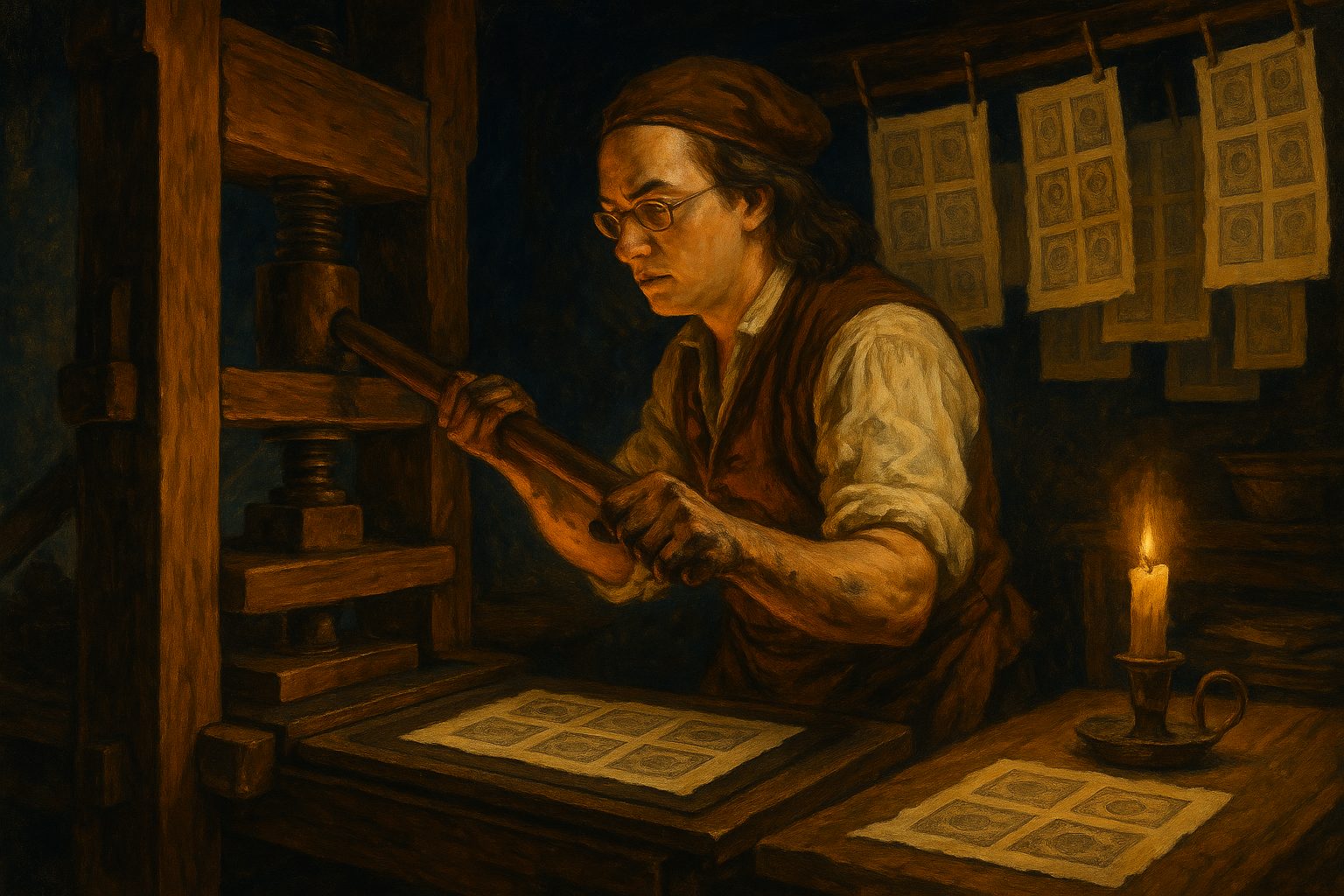
マサチューセッツは、紙幣を刷りすぎてその価値を崩した。多くの者は「やはり紙のお金は危うい」と結論した。だが一人の若き印刷工は、まるで逆の問いを立てた――問題は紙幣そのものではなく、その「量」をどう管理するかではないか、と。その男の名は、ベンジャミン・フランクリン。 Massachusetts had printed too much paper and wrecked its value. Many concluded that paper money was simply dangerous. But one young printer asked the opposite question — what if the problem was not paper money itself, but how its quantity is managed? His name was Benjamin Franklin.
若き印刷工の小冊子A Young Printer's Pamphlet
一七二九年、フィラデルフィアの二十三歳の印刷工が、短い小冊子を出版した。題して『紙幣の性質と必要性についての穏当な考察』。印刷工の名はベンジャミン・フランクリン。小冊子は、ペンシルベニアで紙幣の供給を拡大すべきだ、という主張だった。 In 1729, a twenty-three-year-old printer in Philadelphia published a short pamphlet titled "A Modest Enquiry into the Nature and Necessity of a Paper-Currency." The printer was Benjamin Franklin, and the pamphlet argued for expanding the supply of paper money in Pennsylvania.
フランクリンの論はこうだ。ペンシルベニアは貨幣不足に苦しんでおり、それが交易を冷え込ませ、賃金も地価も低く抑えている。貧しい人々と中間層――農民、職人、商人――は、商売を回すだけのお金が手に入らず、借金に押し潰されている。紙幣を増やせば経済が刺激され、賃金が上がり、人々が借金を返す助けになる、と。小冊子は好評を博し、とりわけフランクリンの本来の読者層である債務者の農民や職人に歓迎された。ペンシルベニア議会は紙幣の増発を決議し――フランクリンは、抜け目ない商才を発揮して、その印刷の契約を勝ち取った。 Franklin's argument ran like this: Pennsylvania suffered from a shortage of money, which was depressing trade and holding down wages and property values. The poor and middle classes — farmers, artisans, tradespeople — were being crushed by debt because they could not get enough currency to do business. Expanding the paper supply would stimulate the economy, raise wages, and help ordinary people pay their debts. The pamphlet was well received, especially by the debtor farmers and artisans who were Franklin's natural audience. The Pennsylvania Assembly voted to issue more paper money — and Franklin, in a neat piece of entrepreneurial opportunism, won the contract to print it.
フランクリンの貨幣観は、いくつかの点で時代を先取りしていた。彼は、お金の量と経済活動の関係を体系的に考えた、最初のアメリカ人の一人だった。成長する経済が正しく回るには、成長する貨幣供給が必要だ――この洞察は、今日の経済学者にも広く受け入れられている。論争があるとすれば、それは「どこからが多すぎるのか」「誰がそれを決めるのか」だけだ。 Franklin's monetary thinking was, in some ways, ahead of its time. He was among the first Americans to think systematically about the relationship between the money supply and economic activity — and his insight that a growing economy needs a growing money supply is broadly accepted by economists today. The debate is only over how much is too much, and who should decide.
ペンシルベニアの成功Pennsylvania's Success
ペンシルベニアの紙幣実験は、植民地時代の基準からすれば、驚くほどうまくいった。植民地政府は貨幣供給を比較的慎重に管理し、券を限られた量だけ発行して、その価値をかなり良好に保った。交易は広がり、経済は成長し、ペンシルベニアはアメリカ植民地の中でも最も繁栄した一つとなった。フランクリンはこの経験を、他の植民地への模範として掲げた。 Pennsylvania's paper money experiment was, by colonial standards, remarkably successful. The government managed the money supply relatively cautiously, issuing bills in limited quantities and keeping their value fairly well. Trade expanded, the economy grew, and Pennsylvania became one of the most prosperous of the American colonies. Franklin held the experience up as a model for the others.
だがフランクリンは、その危険についても正直だった。紙幣は責任ある管理を必要とする、と彼は認めた。政府が発行しすぎれば、結果はインフレと通貨の減価である。紙幣の成功は、それを管理する機関の規律と信頼性に、すべてがかかっている。これはまさに、二世紀のちに連邦準備制度をめぐって繰り広げられる、あの論争そのものだ。 But Franklin was also honest about the dangers. Paper money, he acknowledged, required responsible management. Issue too much, and the result was inflation and depreciation. The success of paper money depended entirely on the discipline and trustworthiness of the institution managing it — exactly the debate that would surround the Federal Reserve two centuries later.
偽造者たちとの戦いThe War on Counterfeiters
植民地の紙幣は、現代のお金も抱える問題に直面した――偽造である。通貨の精巧な複製を刷ることができれば、その通貨で買える実物の財やサービスを、事実上盗めてしまう。比較的原始的な技術で刷られ、現代のような高度な防犯機能を欠いた植民地紙幣は、嘆かわしいほど簡単に偽造できた。 Colonial paper money faced a problem modern money also faces: counterfeiting. If you could print convincing copies of a currency, you could effectively steal the real goods and services it could buy. Printed with relatively primitive technology and lacking the sophisticated security of modern currency, colonial paper was depressingly easy to forge.

印刷工であるフランクリンは、この問題を痛いほど理解していた。彼はペンシルベニアの紙幣を偽造しにくくする技術をいくつも編み出す。その一つが「ネイチャー・プリンティング(自然印刷)」だった。本物の木の葉を印刷版に押し当て、その独特で複雑な葉脈の模様を写し取る。正確に複製することがほぼ不可能な、葉脈の自然なランダムさが、一種の有機的な防犯機能となった。フランクリンはインクや紙の配合、印刷技術も工夫した。通貨の物理的な技術こそが、その有効性と信頼性を大きく左右する――忘れがちなこの事実を、彼の仕事は教えてくれる。 As a printer, Franklin understood the problem acutely. He devised several techniques to make Pennsylvania's bills harder to forge. One was "nature printing": pressing actual leaves onto the plate to capture the unique, complex vein patterns — a natural randomness almost impossible to copy, an organic security feature. He also experimented with inks, paper mixtures, and printing methods. The physical technology of money, his work reminds us, matters enormously to its trustworthiness — something easy to forget.
①フランクリンは1729年、紙幣増発を説く小冊子を著し、お金の量と経済の関係を体系的に考えた最初期のアメリカ人となった。②ペンシルベニアは慎重な管理で紙幣を成功させた。③だが彼は「発行しすぎればインフレ」という規律の必要も認めた。④偽造対策に葉脈印刷を発明――お金の物理技術もまた信頼を支える。(1) In 1729 Franklin wrote a pamphlet urging more paper money, becoming one of the first Americans to think systematically about money and the economy. (2) Pennsylvania made paper money work through cautious management. (3) Yet he admitted the discipline it required: issue too much, and inflation follows. (4) He invented leaf-vein printing against forgery — the physical technology of money also underpins trust.
お金をめぐる、帝国の争いAn Empire's War over Money
一七五〇年代、ペンシルベニアの植民地代理人としてロンドンに送られた頃には、フランクリンはアメリカ屈指の洗練された経済思想家になっていた。そして彼はただちに見抜いた――植民地の紙幣は、単なる経済問題ではなく、政治問題なのだ、と。 By the time Franklin was sent to London as Pennsylvania's colonial agent in the 1750s, he had become one of the most sophisticated economic thinkers in America. And he saw at once that colonial paper money was not merely an economic issue but a political one.
本国の商人たちは、植民地の紙幣を深い疑念の目で見ていた。彼らは植民地の債務者から紙幣で支払いを受けねばならなかったが、その紙幣が借金を負った時点から減価していること――つまり貸した額より少ない価値しか戻ってこないこと――をしばしば正当に恐れた。彼らは議会に、植民地紙幣の発行制限を働きかける。議会は応じた。一七五一年と一七六四年の一連の「通貨法」が、植民地の紙幣発行と、それを私的債務の支払いに使うことを制限したのである。フランクリンはこの制限に、人前でも、印刷物でも、激しく反対した。彼は理解していた――通貨法は単なる経済規制ではなく、帝国による支配の主張なのだ、と。自分たちのお金の量を管理する力を奪われることは、自分たちの経済を管理する力を奪われることだった。 English merchants viewed colonial paper money with deep suspicion. They had to accept it from colonial debtors, yet feared — often rightly — that it had depreciated since the debt was incurred, so they were repaid less than they had lent. They lobbied Parliament for restrictions, and Parliament obliged: the Currency Acts of 1751 and 1764 curbed the colonies' ability to issue paper and to use it for private debts. Franklin argued fiercely against them, in person and in print. He understood that the Currency Acts were not mere economic rules but assertions of imperial control: to be denied the power to manage your own money supply was to be denied the power to manage your own economy.
通貨法は、印紙法や茶法ほど有名ではない。だがそれは、植民地の世論を独立へと押しやった不満の一つとなった。そしてついに本国との決別が訪れたとき、新生アメリカ政府が真っ先に行使することになるのが――英国が長らく否定してきた、まさにその「通貨主権」だった。次回――「通貨法と革命への道」。お金の支配が、いかにして革命の火種となったかを辿る。 The Currency Acts are far less famous than the Stamp Act or the Tea Act. Yet they became one of the grievances that pushed colonial opinion toward independence. And when the break finally came, one of the first things the new American government would exercise was precisely the monetary sovereignty Britain had so long denied. Next time — "The Currency Act and the Road to Revolution": how control over money became kindling for revolt.