イングランド銀行が、母国に近代的な金融の背骨を与えていた頃。大西洋の向こうでは、入植者たちが正反対の問題に直面していた。銀行も、硬貨も、そもそも「何をお金とするか」の合意さえない。彼らは、ゼロからお金を発明しなおさねばならなかった。 While the Bank of England was giving the mother country a modern financial backbone, across the Atlantic the settlers faced the opposite problem. No banks, no coins — not even an agreement on what counted as money. They had to invent money all over again, from nothing.
硬貨なき新大陸A New World Without Coin
十七世紀初頭、イングランドの入植者が北米に定住しはじめたとき、彼らは即座に、そして切実な問題にぶつかった。お金がほとんどないのだ。意外に聞こえるかもしれない。開拓者といえば、森を切り拓き、作物を植え、住居を建てる――生存に追われる人々を思い浮かべる。だがお金は、荒野においてさえ経済生活に不可欠だった。道具も、種も、布も、自分では作れないものを買う。労働の対価を払う。互いに、そして本国の商人と交易する。すべてにお金が要った。 When English settlers began establishing themselves in North America in the early 1600s, they ran at once into a sharp, practical problem: they had almost no money. It sounds surprising. We picture pioneers clearing forests, planting crops, building shelter — people consumed by survival. But money was essential to economic life even in the wilderness. They had to buy tools, seeds, and cloth they could not make; pay for labor; trade with each other and with merchants back home. All of it took money.
植民地は、自前で硬貨を鋳造することを許されていなかった――それは王の専権事項として固く守られていた。そして本国の硬貨は、絶えず大西洋の向こうへ流れ戻った。植民地は本国へ輸出する以上に、本国から輸入していたからだ。結果は、植民地時代を通じた、慢性的な「正貨(金属貨幣)」の不足だった。 The colonies were not allowed to mint their own coins — that was a royal prerogative, jealously guarded. And English coins drained steadily back across the Atlantic, because the colonies imported more from the mother country than they exported. The result was a chronic shortage of hard money throughout the colonial era.
人々が「お金」にしたものWhat People Made into Money
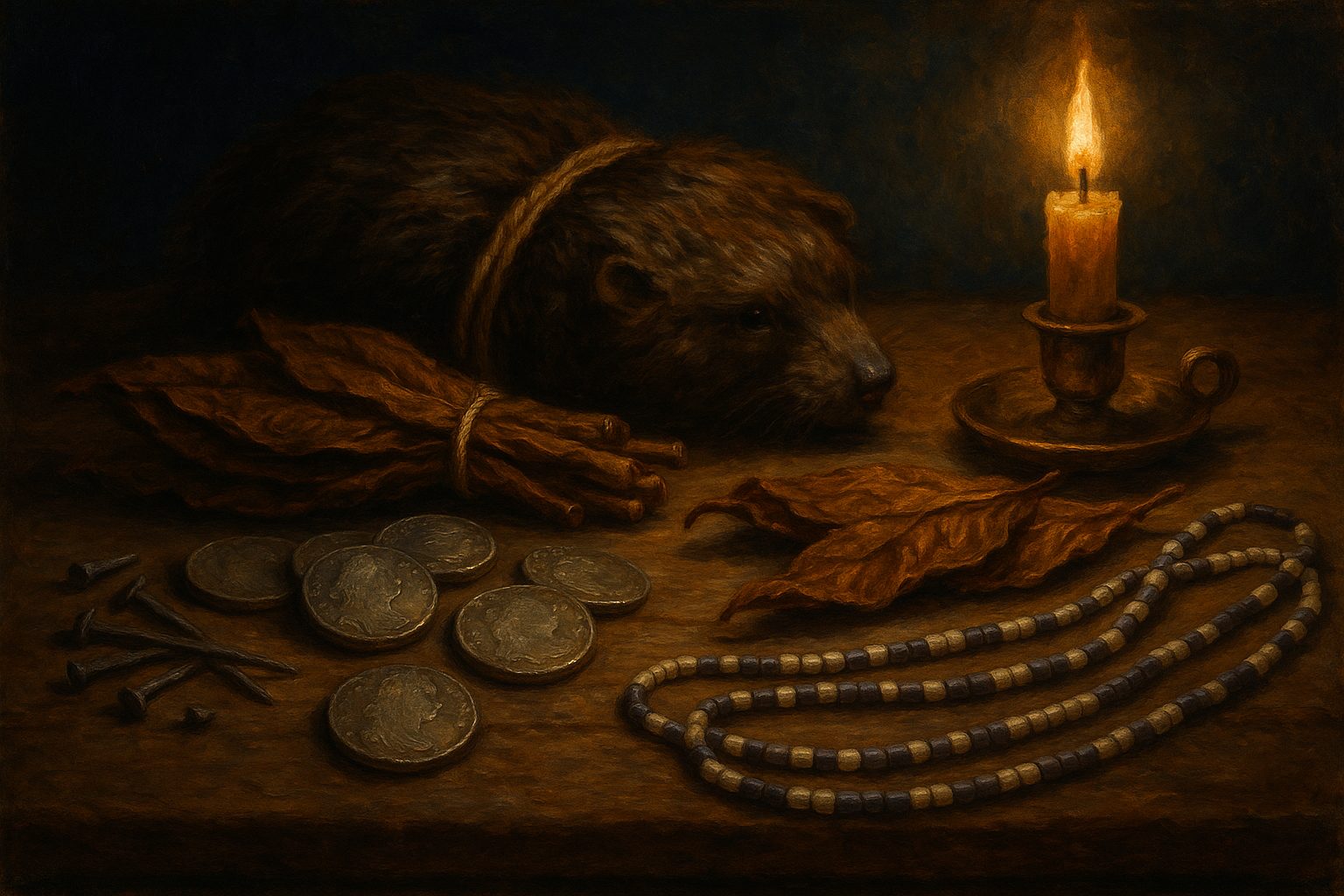
入植者は、ありあわせで工夫した。最初期には、先住民が作る貝殻のビーズ「ワンパム」を交換の媒介として使った。商品貨幣も用いた――バージニアとメリーランドではタバコ、ニューイングランドや毛皮交易地帯ではビーバーの毛皮、サウスカロライナでは米。鉄が乏しく、建築に絶えず求められた一部の植民地では、釘さえ通貨になった。 The settlers improvised. In the earliest days they used wampum — shell beads made by Native Americans — as a medium of exchange. They used commodity money too: tobacco in Virginia and Maryland, beaver pelts in New England and the fur-trading regions, rice in South Carolina. In some colonies, where iron was scarce and always in demand for building, even nails served as currency.
「八枚もの」 ― スペイン・ドルThe "Piece of Eight"
植民地アメリカで最も広く流通した金属通貨は、英国のものではなかった。スペインのものである。スペイン・ドル――「八枚もの(ピース・オブ・エイト)」とも呼ばれた大型の銀貨は、メキシコとペルーで採れた銀から大量に鋳造された。カリブから中国まで、大西洋世界の隅々を巡り、スペインやオランダ領カリブとの交易を通じて英領植民地にも流れ込んだ。 The most common metallic currency in colonial America was not English at all. It was Spanish. The Spanish dollar — also called the "piece of eight" — was a large silver coin minted in enormous quantities from silver mined in Mexico and Peru. It circulated throughout the Atlantic world, from the Caribbean to China, and flowed into the English colonies through trade with the Spanish and Dutch Caribbean.
スペイン・ドルはあまりに広く使われ、植民地アメリカの事実上の基準通貨となった。のちにアメリカが自国の通貨を作るとき、それを「ドル」と呼ぶことにしたのは、まったくの偶然ではない。だが、そのスペイン・ドルでさえ、植民地の需要を満たすほど潤沢に手に入ることはなかった。慢性的な貨幣不足は、経済発展の重しであり続けた。そして、小さな植民地でついに、ある一線が越えられる。 The Spanish dollar was so ubiquitous that it became the de facto standard of colonial America — which is why, when the United States later created its own currency, it chose to call it the "dollar." But even Spanish dollars were never plentiful enough to meet the colonies' needs. The chronic shortage of money remained a drag on growth. And then, in one small colony, a line was finally crossed.
マサチューセッツの実験The Massachusetts Experiment
一六九〇年、マサチューセッツ湾植民地は財政危機に陥った。フランス領ケベックを攻めるため軍を送ったが、遠征はみじめな失敗に終わる。兵士たちは未払いのまま、怒って帰還した。植民地政府には彼らに払う金も銀もなく、兵の反乱が迫っていた。 In 1690, the Massachusetts Bay Colony fell into a financial crisis. It had sent an army to attack French-held Quebec, and the campaign was a dismal failure. The soldiers came home unpaid and angry. The colonial government had no gold or silver to pay them, and a mutiny loomed.
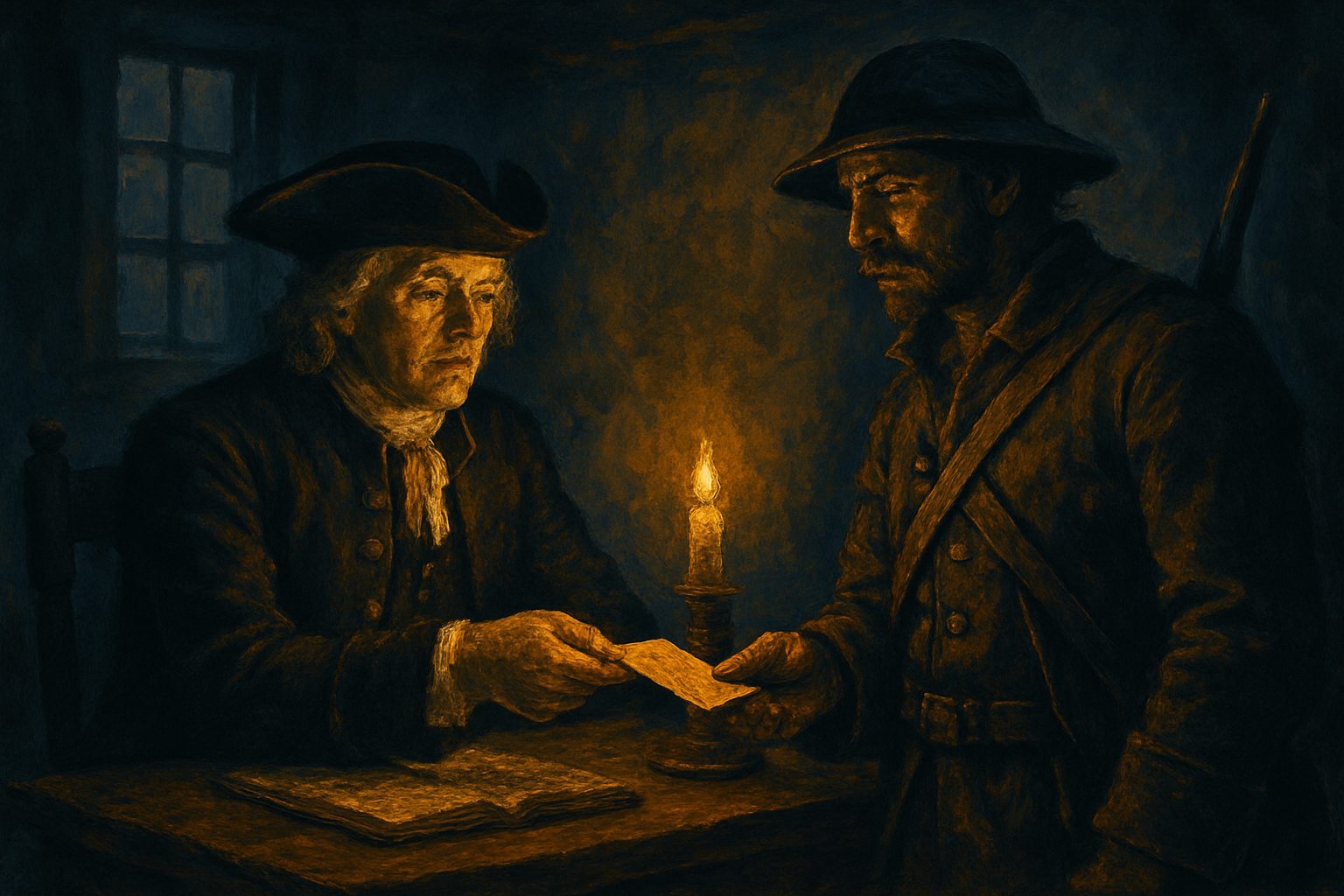
窮余の策として、マサチューセッツ植民地議会は前代未聞の一手を打った。兵士に支払うため「信用券(ビル・オブ・クレジット)」という紙幣を発行したのである。これは、将来いつか額面どおりの金銀で支払う、という政府の約束手形――いわば政府の借用証書だった。これが、西洋世界で政府が発行した最初の紙幣である。マサチューセッツは、政府紙幣を発明した。 In desperation, the Massachusetts assembly took an unprecedented step: it issued paper bills of credit to pay the soldiers. These were promises by the government to pay their face value in gold or silver at some future date — government IOUs, in effect. This was the first paper money issued by a government in the Western world. Massachusetts had invented the government banknote.
券は、はじめのうちは機能した。兵士が受け取り、商人が取引で受け入れ、通貨として流通した。政府はこの解決に味をしめ、さらに券を発行し――そしてまた発行した。ここから、おなじみの厄介事が始まる。流通する紙券が増えるほど、一枚あたりの価値は下がっていく。物価が上がりはじめ、券は金銀に対して割り引かれて取引され、やがてマサチューセッツの券は額面のごく一部の価値しか持たなくなった。植民地は痛みとともに学んだ――紙を刷るだけで本当の富は生み出せない、と。 The bills worked, at first. The soldiers took them, merchants accepted them in trade, and they circulated as currency. Pleased, the government issued more — and then more. And here the familiar trouble began. The more paper in circulation, the less each bill was worth. Prices began to rise; the bills traded at a discount to gold and silver; and in time Massachusetts bills were worth only a fraction of their face value. The colony learned, painfully, that you cannot create real wealth simply by printing paper.
①植民地は自前の硬貨を許されず、慢性的な貨幣不足に苦しんだ。②ワンパム・タバコ・毛皮・スペイン・ドルなど、あらゆるものが「お金」になった(「ドル」の名もここに由来)。③1690年、マサチューセッツが西洋初の政府紙幣を発行。④発行しすぎればインフレ――この教訓は、二百年後のFRBをめぐる議論まで繰り返される。(1) Barred from minting coins, the colonies suffered a chronic money shortage. (2) Almost anything became money — wampum, tobacco, pelts, the Spanish dollar (the source of the name "dollar"). (3) In 1690 Massachusetts issued the West's first government paper money. (4) Issue too much and you get inflation — a lesson echoed right up to the Fed debates two centuries on.
土地を担保にしたお金Money Backed by Land
他の植民地も、成功と破綻のさまざまな度合いで、紙幣を試した。なかでも興味深いのが、一七四〇年のマサチューセッツ「ランド・バンク(土地銀行)」である。これは政府機関ではなく民間の試みで、金ではなく「土地」を裏づけに紙幣を発行しようとした。土地を持つ農民が証文を預ければ、見返りに紙券を受け取り、それで借金を払い、物を買える――。 Other colonies experimented with paper money, with varying degrees of success and disaster. One of the most intriguing was the Massachusetts Land Bank of 1740 — not a government body but a private venture that proposed to issue paper backed not by gold but by land. Farmers who owned land could deposit their deeds and receive paper bills in return, which they could use to pay debts and buy goods.
この発想には、確かな魅力があった。土地は植民地アメリカで最も一般的な富であり、それを通貨の裏づけにすれば、普通の農民が使えるお金の量は飛躍的に増える。貴金属ではなく実物資産に裏打ちされた通貨――どこか現代的にすら響く構想だ。だが、ボストンの保守的な商人と本国当局はこれを嫌悪した。土地担保の通貨は本質的にインフレ的で当てにならない、と恐れたのである(その懸念には一理あった)。英国議会は一七四一年、ランド・バンクを潰すための法律をわざわざ制定し、機関は崩壊、出資者たちは破滅した。 The idea had genuine appeal. Land was the most common form of wealth in colonial America, and using it to back currency would vastly expand the money available to ordinary farmers — a notion that sounds almost modern, currency backed by real assets rather than precious metal. But the conservative merchants of Boston and the authorities in London were horrified, fearing — with some justification — that land-backed currency would be inherently inflationary and unreliable. In 1741 Parliament passed legislation specifically to kill the Land Bank; the institution collapsed, and its investors were ruined.
破滅した出資者のなかに、サミュエル・アダムズという執事がいた。その息子――同じ名のサミュエル・アダムズは、のちにアメリカ独立革命の最も名高い扇動者の一人となる。彼は、父が英国の金融規制によって破滅させられるのを、間近に見て育った。お金と政治は、植民地アメリカですでに分かちがたく絡み合っていた。そしてその絡まりは、いっそう深くなっていく。次回――「フランクリンの紙幣実験」。一人の若き印刷工が、お金の量と経済の関係を、誰よりも早く見抜く物語である。 Among the ruined investors was a deacon named Samuel Adams. His son — also Samuel Adams — would become one of the most famous firebrands of the American Revolution, having grown up watching his father ruined by English financial regulation. Money and politics were already inseparable in colonial America, and the knot would only tighten. Next time — "Franklin's Paper Money Experiment": how one young printer saw, earlier than almost anyone, the link between the money supply and the economy.