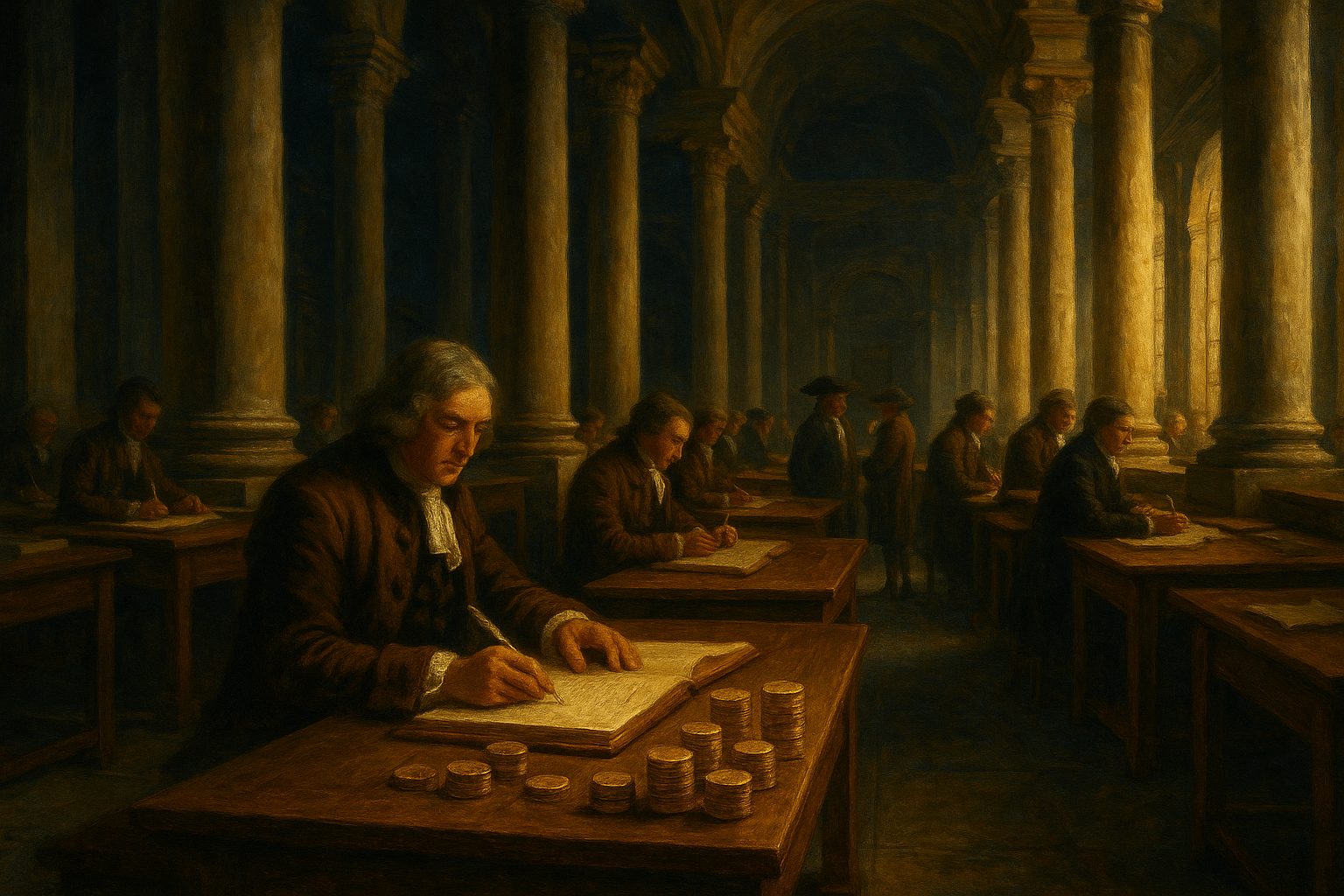
金細工師たちは、無からお金を生み出す術を見つけた。だがその仕組みは、標準もなく、最後の貸し手もなく、恐慌のたびに崩れた。十七世紀末のイングランドは、それを乗り越える「何か」を必要としていた。そしてその何かは、皮肉にも――戦争への借金から生まれた。 The goldsmiths had found how to make money from nothing. But their system had no standard, no lender of last resort, and it shattered with every panic. By the close of the 1600s, England needed something to rise above it. And that something was born — fittingly — from the debts of war.
危機に瀕した王国A Kingdom in Crisis
十七世紀末、イングランドは深刻な財政難にあった。フランスとの高くつく戦争のさなかで、政府は債務に喘いでいた。通貨は質を落とし、信用を失っていた――硬貨を削り取る「クリッピング」や贋造が横行していたのだ。そして、まだ小さく脆かった金細工師の銀行業は、膨らみ続ける王国の資金需要に、とても応えられなかった。 By the late seventeenth century, England was in serious financial trouble. In the middle of an expensive war with France, the government was drowning in debt. The currency was debased and distrusted — clipping and counterfeiting were rampant. And the still small, fragile goldsmith-banking trade could not begin to meet the kingdom's swelling need for funds.
国家には、これまで誰も持ったことのない規模と信用を備えた、新しい種類の機関が必要だった。 The state needed a new kind of institution — one with a scale and credibility no one had ever held before.
一六九四年、十二日間の奇跡1694: A Miracle in Twelve Days
一六九四年、ウィリアム・パターソンというスコットランドの商人が、ひとつの解決策を提案した。新しい機関を作り、政府が喉から手が出るほど欲しがっている資金を貸す。その見返りに、その機関は銀行券を発行する権利と、いくつかの特権を得る――というものだ。政府は戦費を即座に手にし、出資者は安定した利回りを得て、イングランドはより堅固な金融の土台を手にする。三方よしの取引だった。 In 1694, a Scottish merchant named William Paterson proposed a solution. Create a new institution that would lend the government the money it so desperately wanted. In return, that institution would gain the right to issue banknotes and certain privileges. The government would get its war funds at once; investors would earn a steady return; and England would gain a firmer financial foundation. A bargain that suited all sides.

議会は同意した。一六九四年七月二十七日、イングランド銀行は、百二十万ポンドという巨額の資本とともに設立された――それも、民間の投資家からわずか十二日で集められた。開業から数日のうちに、銀行はその百二十万ポンドをそっくり政府へ貸し付けた。国家と銀行が、債務という名の糸で、分かちがたく結ばれた瞬間である。 Parliament agreed. On 27 July 1694, the Bank of England was founded with the vast capital of £1.2 million — raised from private investors in just twelve days. Within days of opening, it lent the entire £1.2 million to the government. In that moment, state and bank were bound together, inseparably, by a thread called debt.
何が違ったのかWhat Made It Different
イングランド銀行は、世界初の「銀行」ではない。だが、今日われわれが「中央銀行」と呼ぶ機能を、はっきりと認識できる形で初めて果たした機関だった。その役割は、大きく四つにまとめられる。 The Bank of England was not the world's first bank. But it was the first to perform, in recognizable form, the functions we now call those of a central bank. They can be grouped into four.
第一に、それは政府の銀行だった。国家の口座を管理し、政府の借入を取り計らい、国債を扱う。これが、国家との特別で特権的な関係を銀行に与えた。第二に、銀行券を発行する権利を持った――その準備と評判に裏打ちされた紙のお金である。時とともにイングランド銀行券はイングランドで最も信頼される紙幣となり、金細工師や他の銀行が出す券を押しのけていった。 First, it was the government's bank. It managed the state's accounts, arranged its borrowing, and handled the national debt — a uniquely privileged tie to the state. Second, it held the right to issue banknotes, paper backed by its reserves and reputation. Over time, Bank of England notes became the most trusted in the land, displacing those of goldsmiths and other banks.
第三に、それは――半ば偶然に、しかし徐々に――最後の貸し手になった。他の銀行が窮地に陥ったとき、イングランド銀行が緊急の融資に乗り出し、恐慌が全面的な金融危機へと雪崩れ込むのを食い止める。これは当初の使命にはなかったが、やがて最も重要な機能のひとつとなる。第四に、他の銀行の準備を預かる金庫番となった。各行が「国で最も安全な機関」たるイングランド銀行に預金を置くようになり、銀行はイングランド金融の中心に座った。 Third, it became — half by accident, but steadily — the lender of last resort. When other banks were in trouble, the Bank would step in with emergency lending, keeping a panic from cascading into a full crisis. This was no part of its original mandate, yet it grew into one of its most important roles. Fourth, it became custodian of other banks' reserves: banks kept deposits at the Bank, knowing it the safest institution in the country, and so it sat at the centre of English finance.
銀行をめぐる論争The Controversy of the Bank
イングランド銀行は、その誕生の瞬間から論争の的だった。そして当時投げかけられた批判は、何世紀ものちに、アメリカ自身の中央銀行をめぐる論争で、ほとんどそのまま繰り返されることになる。 The Bank was controversial from its very birth. And the objections raised then would echo, almost word for word, in the debates over America's own central bank more than a century later.
ある者は、銀行が私的な株主に、公の財政に対する過大な力を与えていると反発した。イングランド銀行は私有――株式は富裕な商人や投資家が握っていた――でありながら、国債の管理と、通貨として流通する銀行券を通じて、巨大な公的影響力を振るった。私的な機関が事実上、お金の量を支配するのは、危険ではないのか。別の者は、手持ちの金より多くの券を発行できること自体が、根本的に不誠実だと論じた。これは金細工師に向けられたのと同じ批判であり、部分準備銀行への根強い異議として、何世紀も生き残る。さらに別の者は、銀行と政府の癒着を憂えた。国家財政に不可欠な存在となることで、銀行は、いかなる私的機関も持つべきでない恒久的な政治力を手にしたのではないか、と。 Some objected that the Bank gave its private shareholders too much power over public finance. It was privately owned — its shares held by wealthy merchants and investors — yet it wielded vast public influence through its management of the debt and its notes, which circulated as currency. Was it not dangerous for a private body to effectively control the money supply? Others argued that the very ability to issue more notes than it held gold was fundamentally dishonest — the same charge once leveled at the goldsmiths, and a persistent objection to fractional reserve banking that would live on for centuries. Still others feared the bond between bank and government: by making itself essential to state finance, had the Bank acquired a permanent political power no private institution should hold?
①イングランド銀行(1694)は、戦費を政府に貸す見返りに銀行券発行権を得て生まれた。②世界で初めて「政府の銀行・銀行券発行・最後の貸し手・準備の保管」という中央銀行の四機能を担った。③私的所有でありながら公的な力を握ることへの批判は、のちにアメリカでそっくり繰り返される。④それでも銀行は機能し、世界中が模倣する原型となった。(1) The Bank of England (1694) was born by lending war funds to the state in exchange for the right to issue notes. (2) It was the first to perform the four central-bank functions: the government's bank, note issuer, lender of last resort, custodian of reserves. (3) The critique of private hands holding public power would later be repeated, almost exactly, in America. (4) Yet the Bank worked — and became the prototype the world would copy.
世界の模範A Model for the World
批判が何を言おうと、イングランド銀行は機能した。続く数十年、数世紀にわたり、それは中核の使命――政府への資金供給、通貨の安定、そしてイングランドを世界一の商工業国へと押し上げる金融的信用の土台――を、驚くほど見事に果たした。やがてこの銀行は、各国が研究し、模倣しようとする模範となる。一七九〇年代、アレクサンダー・ハミルトンが新生アメリカの金融制度を設計しはじめたとき、彼が明確に手本としたのが、このイングランド銀行だった。 Whatever its critics said, the Bank worked. Over the following decades and centuries it served its core missions remarkably well — funding the government, stabilizing the currency, and providing the foundation of financial credit that helped make England the world's foremost commercial and industrial power. It became the model other nations studied and tried to copy. When Alexander Hamilton set out to design the financial system of the young United States in the 1790s, it was the Bank of England he explicitly took as his guide.
だがハミルトンへ進む前に、私たちはお金とともに大西洋を渡らねばならない。ヨーロッパの入植者たちが新大陸にたどり着き、金もなく、確立した銀行制度もなく、そもそもお金とは何かについての合意さえないまま、ゼロから経済を築こうとしたとき、何が起きたのか。次回――「大西洋を渡るお金」。硬貨なき新世界で、人々が「お金」を発明しなおす物語である。 But before we reach Hamilton, we must follow money across the Atlantic. What happened when European settlers reached the New World and tried to build an economy from scratch — with no gold, no established banking, and no agreement on what money even was? Next time — "Money Crosses the Atlantic": how, in a world without coin, people reinvented money itself.